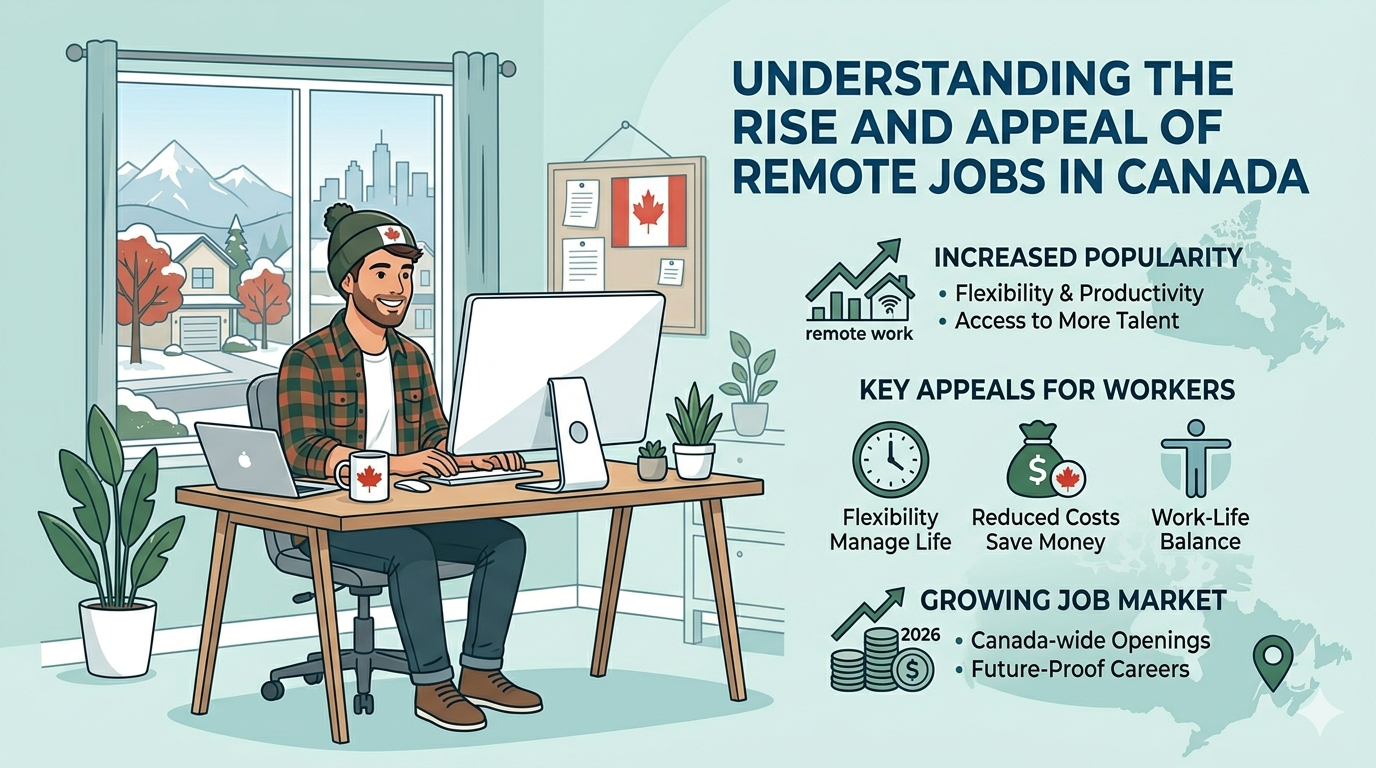
The Growing Popularity of Remote Work in Canada
Remote jobs in Canada have become far more than a temporary trend; they are now a major part of the country’s modern workforce. Over the last few years, Canadian companies across industries such as technology, customer service, digital marketing, finance, education, and healthcare have increasingly adopted remote work models. This shift happened because businesses realized that many roles could be performed efficiently without requiring employees to sit in a physical office every day. As a result, remote work has opened new opportunities for people living in different provinces, small towns, and even rural areas where traditional job opportunities may be limited. It has also allowed employers to recruit talent from a wider pool instead of being restricted to candidates who live near the company’s office. In today’s job market, remote work is no longer seen as an unusual arrangement; it is viewed as a practical, flexible, and highly productive way of working.
Why Canada Has Become a Strong Market for Remote Jobs
Canada has become one of the most attractive countries for remote work because of its strong digital infrastructure, skilled workforce, and growing startup ecosystem. Many Canadian businesses are already comfortable using cloud-based tools, project management software, video conferencing platforms, and digital communication systems, which makes remote collaboration much easier. In addition, Canada has a diverse economy with companies operating in sectors that naturally support remote work, such as software development, content creation, online education, consulting, e-commerce, and customer support. Employers in Canada are also becoming more aware of employee well-being, work-life balance, and flexible work arrangements, which has made them more willing to offer remote positions. This combination of technology, business culture, and talent availability has helped create a strong environment for remote jobs to grow and thrive.
The Main Benefits of Remote Jobs for Canadian Workers
One of the biggest reasons people are attracted to remote jobs in Canada is the level of flexibility they provide. Instead of spending hours commuting in traffic, workers can use that time more productively or personally, whether by focusing on work, spending time with family, or simply reducing daily stress. Remote jobs also allow individuals to create a work environment that suits their comfort and productivity style. For many professionals, this leads to better concentration, improved time management, and a healthier balance between work and personal life. Another important advantage is that remote jobs often give people access to employment opportunities outside their local city. Someone living in a smaller Canadian town can work for a company based in Toronto, Vancouver, Calgary, or even internationally without relocating. This expands career possibilities and can significantly improve income and long-term professional growth.
Industries in Canada That Offer the Most Remote Jobs
Not every industry supports remote work equally, but several sectors in Canada have become major sources of remote employment. The technology industry is one of the strongest, offering positions such as software developer, web designer, data analyst, IT support specialist, cybersecurity professional, and product manager. Digital marketing is another major area, with remote jobs in SEO, content writing, social media management, paid advertising, and email marketing. Customer support and virtual assistance roles are also common because many businesses now handle customer interactions through online chat, email, and remote call systems. In addition, online education has created opportunities for tutors, curriculum developers, and instructional designers. Finance, accounting, human resources, and administrative support have also seen significant remote growth, especially in companies that have fully embraced digital operations.
The Most Common Types of Remote Jobs Available in Canada
Remote jobs in Canada come in many forms, ranging from entry-level roles to highly specialized professional positions. Some of the most common roles include customer service representative, virtual assistant, content writer, graphic designer, social media manager, and online sales representative. More advanced positions include software engineer, UX designer, digital strategist, project manager, accountant, and business analyst. There are also remote opportunities for recruiters, transcriptionists, translators, e-commerce managers, and technical support specialists. The variety is one of the strongest aspects of the Canadian remote job market because it allows people with different educational backgrounds, skill levels, and work experience to find suitable opportunities. Whether someone is just starting their career or has years of experience in a specialized field, there is a strong chance they can find a remote role that matches their abilities.
Skills That Increase Your Chances of Getting a Remote Job in Canada
Employers in Canada do not only look for technical ability when hiring remote workers; they also pay close attention to how well a person can work independently and communicate without constant supervision. Strong written communication is especially important because much of remote work depends on emails, messaging platforms, reports, and virtual meetings. Time management is another essential skill because remote employees are expected to organize their workload, meet deadlines, and stay productive without being physically monitored. Digital literacy also matters a great deal. A remote worker should be comfortable using tools like Zoom, Google Workspace, Slack, Microsoft Teams, Trello, Notion, or project management systems used by the company. In addition, problem-solving, self-discipline, adaptability, and professionalism all play a major role in remote hiring decisions because employers want workers who can stay reliable and effective from any location.
How Remote Jobs Are Changing Career Opportunities in Smaller Canadian Cities
In the past, many people had to move to large cities like Toronto, Vancouver, or Montreal to access better-paying professional jobs. Remote work has started to change that reality. Now, a person living in a smaller city or a less populated region in Canada can compete for positions with major companies without needing to relocate. This shift is especially important for workers who want to stay close to family, avoid high urban living costs, or enjoy a quieter lifestyle while still building a serious career. It has also benefited employers, because they can hire talented people from across the country rather than focusing only on applicants in expensive metropolitan areas. In many ways, remote work is helping to distribute economic opportunity more evenly by connecting skilled individuals to employers regardless of geography.
The Financial Impact of Working Remotely in Canada
Remote jobs can have a meaningful financial impact on workers in Canada, both directly and indirectly. On the direct side, many remote roles offer competitive salaries similar to office-based positions, especially in fields like technology, digital marketing, and project management. On the indirect side, remote employees often save money on transportation, fuel, parking, work clothing, and daily meals purchased outside the home. For workers in major cities, the savings from not commuting can be substantial over the course of a year. Remote work may also reduce relocation pressure, allowing employees to live in areas with lower rent or more affordable housing while still working for a company based in a high-paying urban market. However, remote workers must also consider costs such as internet service, home office equipment, and electricity, which means financial planning remains important.
Challenges People Face in Remote Jobs and How They Affect Productivity
Although remote work offers many benefits, it is not always easy. One of the biggest challenges is isolation, especially for workers who are used to daily social interaction in an office. Without proper communication, some employees may feel disconnected from their team or uncertain about company expectations. Another challenge is maintaining focus in a home environment where distractions such as family responsibilities, noise, or personal errands can interrupt work. Some people also struggle to separate their work life from their personal life, which can lead to longer working hours and burnout. In Canada’s remote job market, employers increasingly recognize these issues and are trying to address them through regular team check-ins, virtual collaboration, wellness support, and flexible schedules. For remote workers, building routines, setting boundaries, and maintaining clear communication are essential for long-term success.
Why Remote Jobs Are Likely to Remain Important in Canada’s Future Workforce
Remote jobs are not disappearing anytime soon because they solve real problems for both employers and employees. For companies, remote work can reduce office costs, increase access to talent, and improve employee retention when workers value flexibility. For employees, it can create better work-life balance, wider career access, and the ability to work from a location that suits their lifestyle and financial goals. Even organizations that have brought some staff back into the office often continue to offer hybrid or fully remote positions for selected roles. In Canada, where geography can make commuting and relocation difficult for many people, remote work is especially valuable. It represents a long-term shift in how work is organized, how businesses hire, and how professionals build careers. For that reason, anyone interested in the future of employment in Canada should pay serious attention to the continued rise of remote jobs.
How to Find and Succeed in Remote Jobs in Canada
Where to Search for Remote Jobs in Canada
Finding remote jobs in Canada requires more than simply typing “work from home” into a search bar. Job seekers need to use reliable platforms that regularly post remote positions from legitimate employers. Popular options include LinkedIn, Indeed Canada, company career pages, startup job boards, and specialized remote work websites. Many Canadian employers also post remote roles directly on their websites before advertising them widely elsewhere, so checking the careers section of companies you admire can be a smart strategy. It is also useful to search by specific job titles such as “remote customer support specialist,” “remote content writer,” or “remote software developer” instead of using broad terms alone. A focused search helps you find better-matched roles and avoids wasting time on irrelevant listings. The key is to combine general job platforms with niche remote job websites and direct employer research.
How to Build a Strong Resume for Canadian Remote Jobs
A resume for remote jobs in Canada should do more than list your work history; it should show that you can perform well in a remote environment. Employers want evidence that you are organized, dependable, and comfortable using digital tools. That means your resume should highlight relevant remote-friendly skills such as written communication, independent problem-solving, online collaboration, and project management. If you have worked remotely before, even on a freelance, part-time, or contract basis, it is important to mention that experience clearly. You should also include any tools you know how to use, such as Zoom, Slack, Google Workspace, Microsoft Teams, Asana, or Trello. Instead of writing generic descriptions, focus on measurable achievements. For example, rather than saying you “helped customers,” explain that you “resolved customer inquiries through email and chat while maintaining high satisfaction scores.” A strong remote resume should make it easy for an employer to picture you working effectively without constant supervision.
Why a Good Cover Letter Matters for Remote Applications
A well-written cover letter can make a major difference when applying for remote jobs in Canada because it gives you a chance to explain why you are specifically suited for remote work. Many candidates send generic applications, but employers notice when someone clearly understands the role and the company’s needs. In your cover letter, you should explain not only why you are interested in the position, but also how your communication style, discipline, digital skills, and work habits make you a strong remote employee. If the job requires collaboration across teams, mention examples of how you have worked with others online. If the role demands independence, explain how you manage deadlines and stay accountable. A thoughtful cover letter shows professionalism and effort, and it can help you stand out in a competitive remote job market where hundreds of candidates may apply for the same opening.
Preparing for a Remote Job Interview in Canada
Remote job interviews often focus on different qualities than traditional office interviews. In addition to asking about your technical experience, Canadian employers may ask how you manage your time, handle communication, stay productive at home, or deal with challenges when working independently. That means preparation should include examples that demonstrate self-discipline, adaptability, and comfort with digital collaboration. You should also make sure your interview setup reflects professionalism. A quiet environment, stable internet connection, working microphone, and clear camera can create a strong first impression. It is wise to test your technology before the interview and keep notes nearby in case you want to reference achievements or examples. Employers are not just evaluating your answers; they are also paying attention to whether you appear prepared for the realities of remote work. A calm, organized, and confident interview performance can significantly improve your chances of getting hired.
Avoiding Scams When Looking for Remote Jobs
One unfortunate reality of the remote job market is that fake job listings and scams exist, which means job seekers in Canada must be careful. Scam postings often promise extremely high pay for very little work, use vague job descriptions, or ask applicants to pay money for training, software, or equipment before being hired. Some fake recruiters may also request personal financial information too early in the hiring process. To protect yourself, it is important to research every company before applying or accepting an offer. Check whether the business has a professional website, a legitimate LinkedIn presence, and real employee activity. Be cautious if communication feels rushed, unprofessional, or suspiciously secretive. A legitimate employer will usually have a clear interview process, company background, and transparent explanation of the role. In remote job hunting, being hopeful is important, but being careful is equally essential.
Creating a Productive Home Workspace for Remote Work
Success in a remote job often depends on the quality of your work environment. You do not need a luxury home office to work effectively in Canada, but you do need a space that supports concentration, comfort, and professionalism. A proper desk, a comfortable chair, good lighting, and a quiet setting can make a huge difference in your energy and productivity. Reliable internet is especially critical because remote jobs often depend on video meetings, cloud-based software, and fast communication. If possible, it is helpful to create a workspace that is separate from areas used for rest or entertainment. This physical separation can improve focus and make it easier to mentally switch into work mode. A productive workspace also includes practical organization, such as keeping chargers, notebooks, headphones, and important documents within reach so that your daily workflow remains smooth and efficient.
The Importance of Communication in Remote Canadian Workplaces
Communication is one of the most important factors in remote job success because team members are not physically together to ask quick questions or solve issues face-to-face. In Canadian remote workplaces, employees are often expected to communicate clearly, respectfully, and consistently through written updates, virtual meetings, and project management tools. This means that even highly skilled workers can struggle if they are unclear, unresponsive, or disorganized in communication. Strong remote communication involves more than replying to messages quickly; it includes asking smart questions, summarizing progress, clarifying deadlines, and informing colleagues when challenges arise. Employers appreciate workers who keep everyone informed rather than disappearing and creating confusion. In a remote environment, communication becomes a visible sign of professionalism, accountability, and teamwork, and it often plays a major role in performance evaluations and career growth.
How Freelancing Can Lead to Long-Term Remote Opportunities in Canada
For many people, freelancing can be a practical first step into the world of remote work. Someone who does not yet have a full-time remote job may begin by offering services such as writing, design, virtual assistance, bookkeeping, social media management, or web development on a freelance basis. This approach allows workers to build a portfolio, gain client experience, and learn how to manage deadlines independently. In Canada, freelancing can also help job seekers prove that they are capable of working remotely before they apply for permanent positions. Over time, freelance work can evolve into long-term contracts, agency partnerships, or even full-time offers from satisfied clients. It is not always an easy path, and income can be inconsistent at first, but freelancing can provide valuable experience, confidence, and evidence of remote work ability that strengthens future job applications.
The Role of Networking in Finding Remote Jobs in Canada
Networking remains highly valuable even in a remote-first job market. Many people assume remote jobs are found only through job boards, but personal connections, online communities, and professional relationships can often lead to better opportunities. In Canada, networking can happen through LinkedIn, industry groups, virtual events, alumni communities, Slack groups, and professional associations. Building relationships does not mean immediately asking strangers for jobs; it means participating in discussions, sharing useful ideas, engaging with professionals in your field, and making yourself visible in a positive way. Over time, this can lead to referrals, recommendations, and insider knowledge about openings before they are publicly posted. For remote roles, networking is especially useful because companies often want candidates they can trust to work independently. A recommendation from someone inside the company can give an applicant a major advantage.
Long-Term Career Growth Through Remote Work in Canada
Remote jobs should not be seen only as a short-term convenience; they can also support serious long-term career development. Many professionals in Canada have built strong careers entirely through remote roles, moving from entry-level work into management, strategy, leadership, and specialized expert positions. The key is to treat remote work as a professional environment where growth still depends on performance, learning, and visibility. Remote employees should continue improving their skills, taking on meaningful projects, documenting achievements, and building strong relationships with colleagues and managers. They should also stay informed about industry trends and remain open to certifications, training, and new responsibilities that can strengthen their value. When approached seriously, remote work can provide not only flexibility but also financial progress, professional credibility, and long-term stability in an increasingly digital Canadian job market.